# A Comprehensive Guide to Long-Term Stay Procedures in Korea for U.S. Citizens: From Eligibility Requirements to Risks of Rejection
There are essential points that U.S. citizens must be aware of before beginning a long-term stay in Korea. This is because two barriers exist: the Ministry of Justice's entry restrictions and the consular discretion. Overlooking these could result in the denial of your visa application or make entry itself impossible.
📌 Key Summary of This Article
- Men who have not fulfilled their military service obligations are ineligible for an F-4 visa until the age of 41, subject to Article 12 of the Overseas Koreans Act.
- The D-8 visa requires an investment of over 100 million won, and proving the sincerity of the investment is the key reason for rejection.
- Checking for entry restrictions is a mandatory preliminary step before applying for a visa; failure to verify this may result in refusal of entry at the airport.
Note: Actual Cases of Rejection and Entry Denial
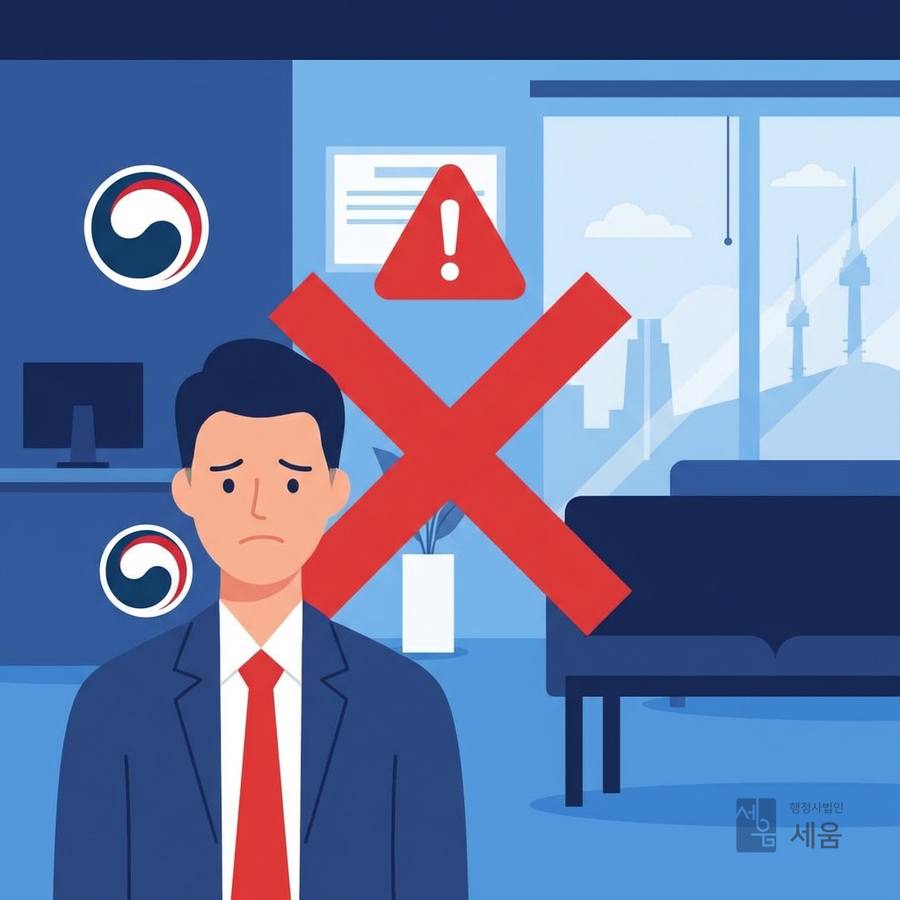
Meeting visa requirements alone is insufficient for U.S. citizens to stay in Korea for an extended period. Examining cases of rejection in actual administrative practice reveals just how strict the legal requirements and consular judgments are.
First Case: F-4 Visa Denial Due to Determination of Purpose to Evade Military Service
A 33-year-old man who graduated from high school in Korea, went to the United States to study, and acquired U.S. citizenship applied for an F-4 visa to work at his parents' company. The Ministry of Justice determined that the acquisition of citizenship was for the purpose of evading military service, citing the lack of records showing his direct ancestors had acquired U.S. citizenship, and the visa was denied. To prevent this, one must secure in advance materials that clearly prove the circumstances of the loss of nationality (records of study or work in the U.S., proof of intent to settle).
Second Case: Fines and Entry Ban Due to Visa-Free Overstay
A U.S. citizen entered the country via K-ETA (visa waiver) and stayed for an extended period exceeding the permitted 90 days. They failed to apply for a formal visa change or an extension of stay. As a result, they were fined approximately 3 million won upon departure and banned from entering Korea for three years. If you need to stay for more than 90 days, you must apply for the appropriate visa in advance.

Eligibility Requirements: Who Can Stay in Korea Long-term
The methods for U.S. citizens to stay in Korea for an extended period vary depending on individual circumstances. In particular, for men who were born with dual citizenship, whether or not they have fulfilled their military service obligations is the most important criterion for determination.
F-4 visa restrictions for men who have not fulfilled their military service
In the case of a male who was a congenital dual national and renounced or lost his nationality without fulfilling his military service obligations, he will not be granted F-4 (Overseas Korean) status of residence until January 1 of the year he turns 41, in accordance with Article 12 of the Overseas Koreans Act. Those within this restriction period must seek another visa instead of the F-4 visa.
Requirements for the D-8 (Corporate Investment) Visa
Under the Foreign Investment Promotion Act, you must report an investment of 100 million KRW or more as a foreign investment and participate in management by establishing or investing in a company. The key is to prove the legal source of the investment funds and a substantial business operation plan. In particular, when investing in a family corporation, you must strongly demonstrate the sincerity of the investment and the intention to participate in substantial management.
E-7 (Specific Activities) Visa Requirements
This applies to those seeking employment in specialized professions within South Korea. You must meet the educational and experience requirements specific to each occupation; generally, this includes a master's degree or higher, or a bachelor's degree plus at least one year of experience. You must clearly demonstrate job-specific expertise that cannot be replaced by a domestic national.
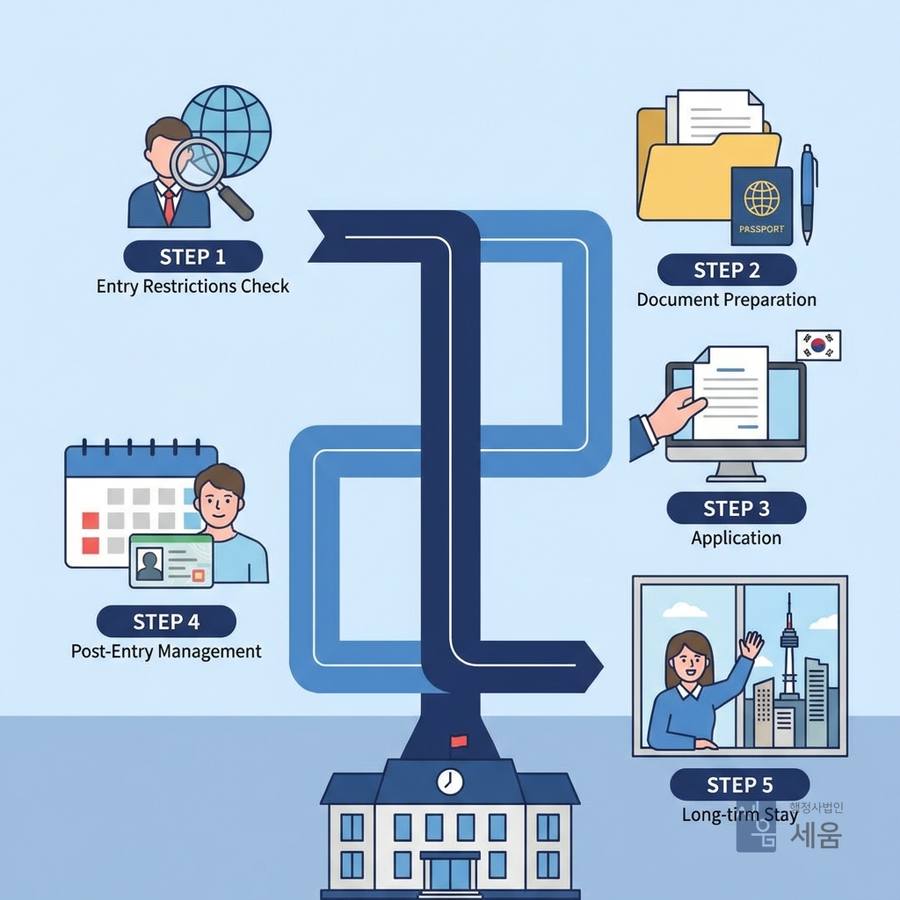
Procedure: Step-by-step preparation process
The key to a U.S. citizen's visa application for long-term stay in Korea is the 'documentation of authenticity.'.
Step 1: Ministry of Justice Entry Restriction Fact-Finding
First, you must apply to the Ministry of Justice in your own name for a verification of entry restrictions to confirm whether any restrictions exist. This step must be completed before applying for a visa, and if restrictions are confirmed, the visa application itself will be impossible. The processing time generally takes about 1 to 2 weeks.
Step 2: Secure evidence to substantiate the circumstances of loss of nationality
To prove that your intention was not to evade military service, secure relevant documents such as the decision on loss of citizenship and records of study, residence, and work in the United States. You must prepare documents that may take time to process in advance, such as school records, graduation certificates, and certificates of employment.
Step 3: Composing Authenticity Verification Materials by Selected Visa
If you choose the D-8 visa, you must transparently prove the source of your investment funds and present a detailed business plan outlining your plan for substantial participation in the corporation's management. If you choose the E-7 visa, you must demonstrate with objective evidence why your degree and work experience are essential to the position.
Step 4: Visa application at an overseas diplomatic mission
Apply for a visa at the South Korean diplomatic mission with jurisdiction over your place of residence. Processing may take anywhere from several weeks to several months, so you should prepare well in advance. Since additional documents may be requested after application, it is important to maintain close communication with the consular officer in charge.
Step 5: Post-entry Stay Management
Upon entering Korea after visa issuance, the immigration office with jurisdiction over your place of residence handles your stay management and extension matters. You must apply for an extension before your period of stay expires and maintain activities that meet the visa conditions.
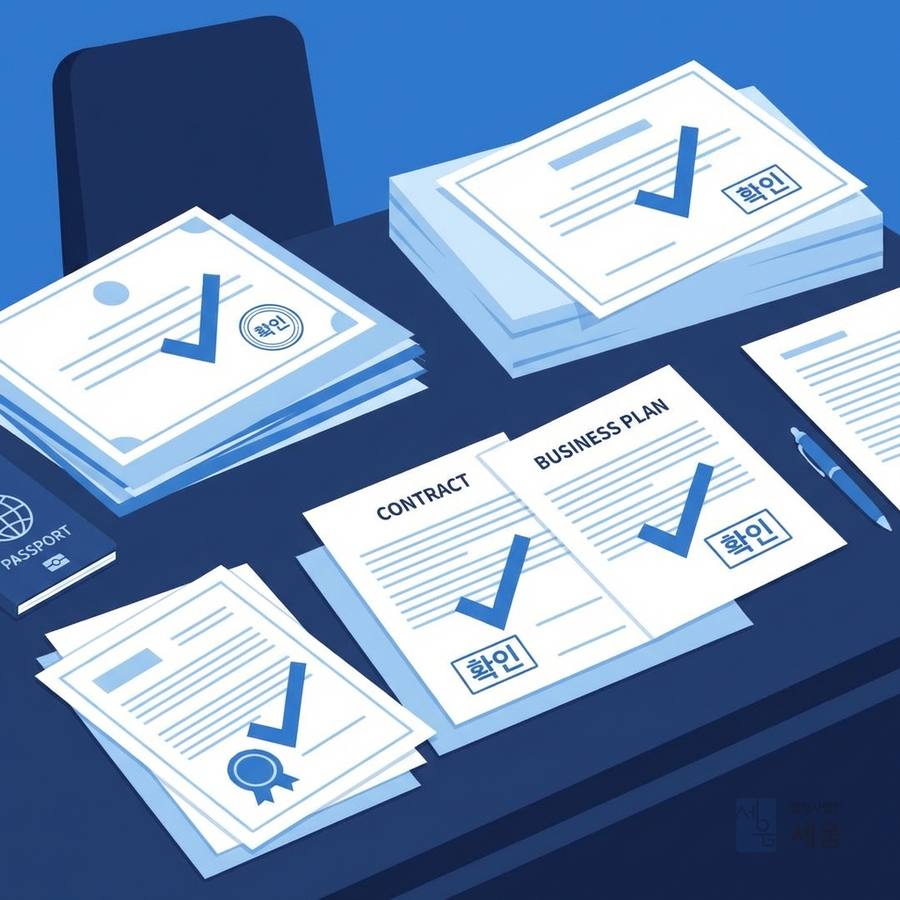
Documents: List of required documents
The documents required for a U.S. citizen applying for a long-term visa in Korea vary depending on the type of visa selected and the individual's circumstances.
Common required documents
Original and copy of passport
Visa Application Form (Consulate Form)
Passport photo (taken within the last 6 months)
U.S. citizenship certificate
Basic Certificate, Family Relationship Certificate (if necessary)
Decision on Loss of Nationality (submitted together with materials proving that the purpose is not to evade military service)
Proof of records of stay, study, or work in the U.S.
Additional documents for D-8 (Corporate Investment) visa
Foreign Investment Declaration Documents and Receipt
Copy of business registration certificate
Certified Copy of Corporate Registration (Verification of Officer Registration)
Proof of source of investment funds (overseas remittance records, history of asset formation, etc.)
Business plan (including specific management plan)
Additional documents for E-7 (Specific Activities) visa
Employment contract
Degree Certificate (Graduation Certificate)
Certificate of Work Experience (Certificate of Employment from Previous Workplace)
Company business registration certificate, corporate registration certificate
Statement of Reason for Employment (Explanation of Irreplaceability by Domestic Workers)
⚠️ Document requirements vary depending on the competent authority and the officer in charge. Please be sure to contact the relevant office to confirm before applying.
💡 Seum's Practical Tips
There have been cases where D-8 visa applications were rejected due to insufficient proof of the source of investment funds. Submitting not only overseas remittance records but also materials organized chronologically regarding the history of asset formation and investment decision-making processes can significantly reduce suspicion from the consular officer.
Frequently Asked Questions
Q. Can men who have not fulfilled their military service obligations also obtain an F-4 visa?
A. No. Under Article 12 of the Overseas Koreans Act, men who have renounced or lost their nationality without fulfilling their military service obligations are not granted F-4 status until January 1 of the year they turn 41. During this period, they must seek long-term residency through other visas such as D-8 or E-7.
Q. What is the most important thing to keep in mind when staying long-term on a D-8 visa?
A. It is of utmost importance to prove the legitimate source of the investment funds and the 'authenticity' of the investment. Particularly when investing in a family business, you must clearly demonstrate your intention to participate in actual management and provide a concrete business plan, rather than viewing it as a loophole investment merely to obtain a visa.
Q. How can I check for entry restrictions?
A. You can apply for a fact check on entry restrictions with the Ministry of Justice of the Republic of Korea under your own name. You must verify this before applying for a visa, and the processing takes approximately 1 to 2 weeks.